The Centers for Disease Control and Prevention and Department of Transportation just released the new Transportation and Health Tool, which provides easy access to data that examines the health impacts of transportation systems. The Transportation and Health Tool provides data on 14 transportation and public health indicators for each state, metropolitan statistical area (MSA), and urbanized area (UZA). The indicators measure how the transportation environment affects health with respect to safety, active transportation, air quality, and connectivity to destinations. You can use the tool to quickly see how a state, MSA, or UZA compares with others in addressing key transportation and health issues. The tool also provides information and resources to help agencies better understand the links between transportation and health and to identify strategies to improve public health through transportation planning and policy
The CDC and DoT’s Transportation and Health Tool
Tree Canopy Data for the Entire State of Pennsylvania
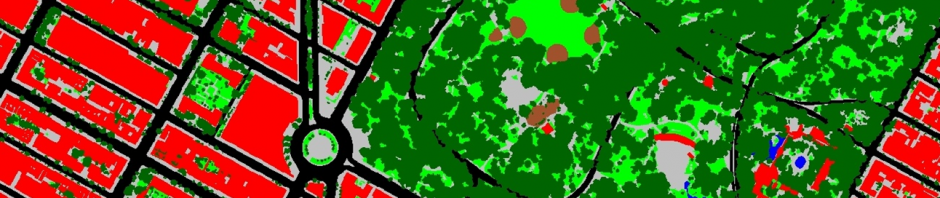
Jarlath O’Neil-Dunne at the University of Vermont just announced the release of a statewide, high-resolution tree canopy dataset for Pennsylvania. The resolution of the data is 1 m which makes it 900 times more detailed than the National Land Cover Dataset; this is an amazing feat.
We previously worked with Jarlath to create tree canopy data for NYC and looked at the link between tree canopy coverage and asthma and allergic sensitization among children in NYC.
Strategies to Refine Annual Business Establishment Data across More than Two Decades
Analyses of place and health have been largely cross-sectional, and new challenges are faced as we wrangle longitudinal geographic data. Our group just published a manuscript detailing our work to clean and code data on all NYC metropolitan area businesses over the period 1990-2010. Our goal was to use twenty years of business establishment data to characterize changes in neighborhoods in terms of the retail food environment, access to physical activity venues, access to medical facilities and access to other commercial and not-for-profit establishments.
Our process included re-geocoding 3,161,715 business locations to avoid disproportionately missing data on older businesses; identifying and coding health-relevant businesses such as food sources and fitness venues across the years; and collapsing potential duplicate business records by location, year, and business category. Spot-checking was used, and the data are set up to allow for sensitivity analyses to check the robustness to these decisions as we move forward.
This effort was championed by lead author Tanya Kaufman, who has engaged in this effort since her MPH practicum project using these data. Daniel Sheehan was the lead geographer on the project and developed the re-geocoding strategies and created time-lapse visualizations of businesses entering and existing the environment. One of Dan’s visualizations can be seen here. It shows the location of Healthy Food Outlets from 1990 to 2010.
The focus of this project was not only to understand and improve the quality of data for future analysis, but also to develop scalable approaches that can be used with the larger national dataset. We have recently been funded to purchase the nationwide business establishment data and to link these data to ongoing cohort studies of cardiovascular disease (R01AG049970-01A1, PI: Lovasi).
CDC Releases New Built Environment Assessment Tool
The CDC released a new direct systematic observation data collection instrument for measuring the core features and quality of the built environment related to behaviors that affect health, especially behaviors such as walking, biking, and other types of physical activity. The core features assessed in the BE Tool include: built environment infrastructure (e.g., road type, curb cuts/ramps, intersections/crosswalks, traffic control, transportation), walkability (e.g. sidewalk/path features, walking safety, aesthetics & amenities), bikeability (e.g., bicycle lane/path features), recreational sites and structures, and the food environment (e.g., access to grocery stores, convenience stores, farmers markets, etc.).
Get the tool [HERE]
Systematic Review of Literature on Neighborhood Park Access and Physical Activity
Providing neighborhood access to clean, safe and engaging park spaces is a strategy being adopted by many communities to promote physical activity. We just published a systematic review of the literature assessing the link between park access and physical activity. After screening 10,949 abstracts that met the search criteria of 1) published between January 1990 and June 2013; 2) US-based with a sample size greater than 100 individuals; 3) included built environment measures related to parks or trails; and 4) included objectively measured physical activity as an outcome, 20 research studies were identified for review.
Five articles reported a significant positive association between parks and physical activity. Nine studies found no association, and six studies had mixed findings. Studies that used study subject’s self-reported (vs. independently-measured) measures of neighborhood park environment characteristics and smaller (vs. larger) neighborhood definitions were more likely to find positive associations. We recommend strategies for further research, employing standardized reporting and innovative study designs to better understand the relationship of parks and physical activity.
Mailman School’s Social Epidemiology Cluster launches a Blog
The Social Epidemiology Cluster is one of the six thematic units within the Mailman School of Public Health‘s Department of Epidemiology and is home to BEH members Andrew Rundle and Gina Lovasi. The Cluster has just launched a blog that will highlight the importance of research and interventions focused on social determinants of health for promoting population health and reducing disparities. The blog will include commentary on research news and policy debates and initiatives, and will disseminate research findings from work being performed at Columbia University.
Neighborhood Safety and Physical Activity
Would you go for a walk around the block or in a local park if you thought your neighborhood unsafe and you would be in danger? At BEH, we care a lot about understanding constraints on outdoor physical activity, including (maybe) safety.
The link between neighborhood safety and physical activity has been tricky to assess, in part because physical activity is tricky to measure (questionnaires are vulnerable to reporting biases and don’t capture small-scale differences in activity between people whereas accelerometers and other activity trackers are sensitive to proper positioning), and in part because no single construct completely represents neighborhood safety – some researchers study fear of victimization, others study crime rates, and still others study aesthetic features such as disorder that may affect the perception that a neighborhood is unsafe.
We recently investigated several measures of safety, including self-reported neighborhood safety, crime rates, and a measure of neighborhood disorder we constructed using Street View imagery in relation to accelerometer-measured and self-reported physical activity, using data from the Physical Activity and Transit survey undertaken by the New York City Department of Health and Mental Hygiene. We found that independently observed measures of neighborhood safety and disorder were not associated with any measures of physical activity, but that reporting the neighborhood to be unsafe was associated with increased odds of reporting no recreational physical activity.
The initial results of our work were presented as a poster at the recent annual meeting of the Population Association of America.
Spatial Patterns of Exposure to Tree Pollen in Cities
Seasonal allergies to tree pollen and other outdoor allergens (grasses, ragweed, mold) trigger respiratory symptoms and asthma exacerbations in urban populations. Tree pollen in particular tends to affect people early in mid-spring. While current pollen levels can readily be compared across broad areas of the US (for example see http://www.weather.com/maps/health), less is known about small scale variation of exposure within a city. Single rooftop monitors tracking daily pollen counts are often used to represent the experience of the entire city. Yet multiple monitoring points would be needed to help us understand how much exposure to tree pollen is driven by a city’s overall tree canopy and regional context versus vegetation in the immediate vicinity. Continue reading
A SMART START: A Symposium on Preventing Childhood Obesity
On April 16th the Mailman School is presenting an afternoon long symposium, “A SMART START: A Symposium on Preventing Childhood Obesity“, focused on prenatal and early childhood determinants of obesity. This symposium is part of a month long series of events in April we are calling “Public Health Fights Obesity”. You can RSVP to attend the symposium by clicking HERE
THURSDAY, APRIL 16
1:00–5:00 P.M.
A SMART START:
A Symposium on Preventing Childhood Obesity
Black Building, 650 West 168th Street
Alumni Auditorium
PLENARY: Why Focus on Pregnancy and Early Childhood?
Andrew Rundle, DrPH, Associate Professor of Epidemiology; Co-Director of Obesity Prevention Initiative, Columbia Mailman School of Public Health
PANEL 1: Gestational Weight Change, Prenatal Factors and Childhood Obesity
Moderator: Virginia Rauh, ScD, Professor of Population and Family Health, Columbia Mailman School of Public Health
Speakers:
Dympna Gallagher, EdD, Associate Professor of Nutritional Medicine, Institute of Human Nutrition, Columbia University College of Physicians & Surgeons
David A Savitz, PhD, Vice President for Research, Professor of Epidemiology, Professor of Obstetrics and Gynecology, Brown University
Cynthia Gyamfi-Bannerman, MD, Associate Professor of Maternal-Fetal Medicine, Director of Maternal-Fetal Medicine Fellowship Program, Medical Director of Perinatal High-Risk Clinic, Columbia University Medical Center
PANEL 2: Early Childhood Factors and Early Childcare Practice and Policies
Moderator: Gretchen Van Wye, PhD, MA, Assistant Commissioner, Bureau of Vital Statistics, NYC Department of Health and Mental Hygiene, Division of Epidemiology
Speakers:
Cynthia Colen, PhD, MPH, Assistant Professor of Sociology, The Ohio State University
Cathy Nonas, MS, RD, Senior Advisor, NYC Department of Health and Mental Hygiene
Sally E Findley, PhD, Professor of Population and Family Health & Sociomedical Sciences, Columbia Mailman School of Public Health
Round Table: Future Directions for Research and Action
Moderator: Y. Claire Wang, MD, ScD, Associate Professor of Health Policy and Management and Co-Director of Obesity Prevention Initiative, Columbia Mailman School of Public Health
Speakers:
Kiyah Duffey, PhD, Director of Global Scientific Affairs, LA Sutherland Group; Parenting blogger and proud mother of three, ages 5 and under
Tina Kauh, PhD, Program Officer, Research-Evaluation-Learning, Robert Wood Johnson Foundation
NE-WAS: Welcoming Big Data to the Neighborhood
Like most researchers investigating neighborhood determinants of health, we are excited that both government and the private sector are making more and more spatially located data available. But even as new data sources allow us to characterize study subjects’ environments more completely, the sheer number of potentially interacting contextual variables we can now study introduces analytic complexity. Drawing an analogy with genomic research, we propose the ‘neighborhood environment-wide association study’ (or NE-WAS) as one approach to address the complexity.
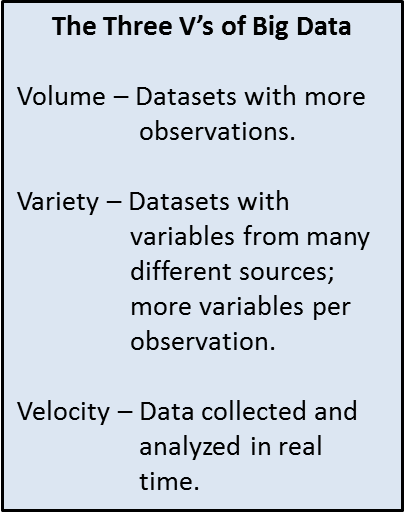
Neighborhood research is increasingly a high-volume, high-variety ‘Big Data’ endeavor. Even as neighborhood research mainstays like the US Census and American Community Survey continue to be updated, new forms and sources of data like social media, remote sensing, and commercial aggregators are providing increasingly detailed insight into neighborhood conditions. Furthermore, through GIS tools and spatial analytic approaches, researchers are defining neighborhoods in creative new ways including network buffers, pill buffers, and neighborhood hulls. With more data at more spatial resolutions, we can characterize study subjects’ neighborhoods in high-dimensional space – for example, one dataset we work with has 1,485 separate variables that describe some aspect of each subject’s residential neighborhood. Continue reading


![Betula sp. pollen [Birch Pollen] photo by Guy Robinson, Fordam University](https://beh.columbia.edu/wp-content/uploads/2015/03/pollen-e1427806989660.jpg?w=640)